Lu pour vous
Par Vincent Carter
La République Démocratique du Congo a été le théâtre de décennies de guerres et de millions de vies perdues, et au cœur de ces tumultes se trouve Jean-Pierre Bemba. Comment cet homme est-il parvenu au pouvoir dans les ténèbres de l’histoire congolaise ? Bemba aurait-il ordonné à ses soldats rebelles de se livrer au cannibalisme sur des pygmées ? Ou s’agit-il d’un autre mythe occidental fabriqué pour diffamer un leader africain et nourrir les stéréotypes de sauvagerie tribale ? Quelle est la relation de Bemba avec les rivaux de George W. Bush et les amis de Bill Clinton ? Comment Bemba est-il lié aux diamants de sang en Afrique et aux armées de mercenaires en Irak ? Pourquoi les troupes ougandaises ont-elles récemment réenvahi le Congo et pourquoi les Nations Unies et la presse internationale sont-elles restées silencieuses à ce sujet ? Une plongée dans l’histoire infâme de Bemba répond à ces questions et bien d’autres.
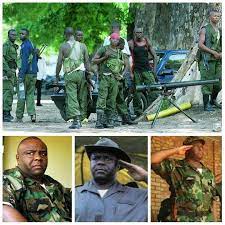
Après une décennie de guerre et des millions de vies perdues en RDC, les vérités les plus fondamentales restent cachées. Lors d’une interview d’Al-Jazeera le 3 août 2007, tenue dans sa villa sur la “Millionaires Row” au Portugal, le seigneur de guerre congolais devenu sénateur de l’opposition en exil, Jean-Pierre Bemba, a parlé avec un sourire narquois de sa volonté d’apporter la démocratie et la liberté au Congo. Interrogé sur les accusations devant le Tribunal pénal international à La Haye, Bemba a assuré à l’interviewer qu’il n’était pas candidat à un quelconque tribunal pour crimes de guerre. “Je ne suis bien sûr impliqué dans aucune de ces choses”, a déclaré Bemba. “Vérifiez vos informations”, a répondu Bemba lorsque pressé, indiquant que tout a été arrangé.
Comme un Pretty Boy Floyd moderne sorti d’Afrique, le visage juvénile de Jean-Pierre Bemba – qui ressemble de manière troublante au dictateur ougandais Idi Amin – s’est comporté comme un enfant gâté avec une armée privée, et ses grands pères blancs l’ont protégé.
MWANA CONGO – FILS DU CONGO
Le seigneur de guerre congolais Jean-Pierre Bemba est né le 4 novembre 1962, moins de deux ans après l’assassinat du nationaliste congolais Patrice Lumumba, à Gbadolite, une ville qui allait bientôt devenir le Zaïre, à la frontière de la République centrafricaine. Il a fréquenté l’université en Belgique, revenant à Kinshasa en tant que membre de l’élite zaïroise. Ses partisans congolais l’ont surnommé Mwana Congo, “le fils du Congo”.
La mère de Jean-Pierre Bemba est décédée lorsqu’il avait douze ans. Son père, Bemba Saolona, était un proche confident de Joseph Mobutu, le président zaïrois soutenu par la CIA pendant 36 ans, et de Juvenal Habyarimana, le président rwandais assassiné le 6 avril 1994 par le major Paul Kagame et l’Armée/Front patriotique rwandais (RPA/F). Bemba Saolona s’est remarié avec une nièce du principal rival politique de Mobutu, le tristement célèbre Étienne Tshisekedi.
Bemba Saolona est un magnat millionnaire emprisonné par l’ancien président Laurent-Désiré Kabila après l’invasion soutenue par les États-Unis qui a renversé Mobutu (1996-1997) et renommé le pays République démocratique du Congo (RDC). En 1999, Bemba Saolona était ministre de l’Économie et de l’Industrie dans le nouveau gouvernement de Laurent Kabila, même si son fils Jean-Pierre, à la tête du Mouvement pour la libération du Congo (MLC), dirigeait une rébellion contre ce gouvernement.
Au début de la rébellion du MLC (1999), Papa Bemba était préoccupé par son petit garçon. “C’est un message de Papa”, citait le New York Times Bemba Saolona, alors âgé de 60 ans, “il devrait vraiment réfléchir sérieusement à ce qu’il fait”. “Je ne suis plus un enfant”, répondit le visage juvénile de Bemba, alors âgé de 39 ans. “Je peux voler de mes propres ailes.”
Bemba Saolona est lié à la République centrafricaine (RCA) et aux réseaux criminels du président centrafricain Ange-Félix Patassé (1993-2003). Bangui, la capitale de la RCA, fournit un soutien économique majeur à la ville congolaise du nord de Gbadolite, un bastion des familles Bemba et Mobutu et un point de transbordement majeur pour les diamants de sang.
Bemba Saolona a travaillé pendant des décennies avec des élites ougandaises impliquées dans des réseaux de taxation criminalisée et coercitive, de racket et d’extorsion qui ont pillé l’est du Zaïre/Congo. Une entreprise de Bemba Saolona est la société Enzymes & Raffineries (ENRA), basée à Beni, dans le Nord-Kivu, où Saolona possède un hôtel touristique et des plantations. Saolona Bemba n’a pas visité ENRA pendant la guerre (1996-2005), mais a maintenu des contacts réguliers, tandis qu’ENRA “est restée indépendante” mais payait des impôts à l’armée rebelle du Rassemblement congolais pour la démocratie (RCD), alliée au Rwanda et contrôlée par le seigneur de guerre congolais et plus tard vice-président de la RDC, Mbusa Nyamwisi, un allié de longue date de l’Ouganda.
L’aéroport privé de Saolona Bemba à ENRA avait une piste en terre battue sans lumières, mais pendant la guerre, il bourdonnait d’avions de toutes tailles atterrissant et décollant avec une fréquence étonnante. De 1998 à au moins 2002, les Forces de défense du peuple ougandais (UPDF) utilisaient le complexe ENRA comme lieu de détention pour des opérations d’interrogatoire et de torture. La Mission d’observation des Nations Unies en République démocratique du Congo (MONUC) a loué des droits de décollage à l’aéroport privé ENRA pendant au moins six ans (2001-2006) : pendant la rébellion, le territoire ENRA était contrôlé par les rebelles du RCD, faisant de la MONUC un soutien financier indirect de la rébellion du RCD ; les paiements de la MONUC à ENRA ont ensuite profité à Bemba Saolona.
À l’âge de trente ans, Jean-Pierre Bemba a considérablement augmenté sa fortune personnelle en suivant les traces de son père en tant qu’assistant personnel (1992-1997) de Joseph Mobutu, le dictateur du Zaïre (1965-1997) : les pères et fils Bembas partagent la responsabilité du terrorisme semé par la Division spéciale présidentielle (DSP) et le Service d’action militaire et de renseignement (SARM) de Mobutu, qui géraient des centres de torture secrets à Kinshasa, massacraient des étudiants et violaient et pillaient en tant que politique d’État.
Bemba a été vice-président du gouvernement de transition de la RDC (2003-2006), tandis que ses principaux commandants militaires, le brigadier général Malik Kijege et le major général Dieudonné Amuli Bahigwa, étaient promus grands chefs des Forces armées de la République démocratique du Congo (FARDC).
Valant des centaines de millions de dollars, les entreprises de la RDC de Jean-Pierre Bemba comprenaient l’électronique, l’aviation et la télévision. Cathy Bemba, la sœur de Jean-Pierre, a épousé François Joseph Nzanga Mobutu, l’un des fils du dictateur, en 1994. Comme Bemba et la plupart des autres, Nzanga Mobutu a payé les frais d’inscription de 50 000 dollars pour la candidature présidentielle en 2006 avec des fonds acquis en trahissant le peuple congolais
Who is Jean-Pierre Bemba and how did he rise to power in the heart of darkness? Did Bemba order his rebel soldiers to cannibalize pygmies? Or is that another Western myth manufactured to malign an African leader and feed stereotypes of tribal savagery? What is Bemba’s relationship to the competitors of George W. Bush and the friends of Bill Clinton? How is Bemba linked to blood diamonds in Africa and mercenary armies in Iraq? Why have troops from Uganda recently re-invaded Congo and why have the United Nations and international press been silent about it? A look at Bemba’s infamous history answers these questions and more.
After a decade of war and millions of lost lives in Congo the most basic truths remain hidden. In an August 3, 2007 Al-Jazeera interview held at his villa on millionaires row in Portugal, Congolese warlord-turned-opposition-Senator-in-exile Jean-Pierre Bemba spoke with a coy smile about bringing democracy and freedom to Congo.[1] Asked about accusations at the International Criminal Tribunal in the Hague, Bemba insured the interviewer that he was not a candidate for any war crimes tribunal. “I am not of course involved in any of these things,” Bemba said. “Check your information,” Bemba replied, when pressed, indicating that it’s all been fixed.
Like a modern day Pretty Boy Floyd out of Africa, the baby-faced Jean-Pierre Bemba-who chillingly resembles the Ugandan dictator Idi Amin-has behaved like a spoiled brat with a private army. And his great white fathers have protected him.
MWANA CONGO-SON OF THE CONGO
Congolese warlord Jean-Pierre Bemba was born November 4, 1962, less than two years after the assassination of Congolese nationalist Patrice Lumumba, in Gbadolite, a city in what was soon to become Zaire, on the border of the Central African Republic. He attended university in Belgium, traveling back to Kinshasa as a member of Zaire‘s elites. Congolese supporters have called him Mwana Congo-“son of Congo.”
Jean-Pierre Bemba’s mother died when he was twelve. His father, Bemba Saolona, was a close confidante of Joseph Mobutu, Zaire‘s 36-year CIA-backed president, and of Juvenal Habyarimana, the Rwandan president assassinated on April 6, 1994 by Major Paul Kagame and the Rwandan Patriotic Army/Front (RPA/F).[2] Bemba Saolona remarried a niece of Mobutu’s main political rival, the infamous Etienne Tshisekedi.
Bemba Saolona is a millionaire tycoon who was jailed by former President Laurent Desire Kabila after the U.S.-backed invasion took Zaire (1996-1997) renamed it the Democratic Republic of Congo (DRC). By 1999 Bemba Saolona was Minister of Economy and Industry in the new Laurent Kabila government, even while his son Jean-Pierre, head of the Movement for the Liberation of Congo (MLC), was leading a rebellion against it.[3]
At the start of the MLC rebellion (1999), Papa Bemba was concerned about his little boy. “This is a message from Papa,” the New York Times quoted Bemba Saolona, then 60, “he should really think hard about what he is doing.” [4]
“I’m not a kid any more,” replied baby-faced Bemba, then 39. “I can fly on my own wings.” [5]
Bemba Saolona is tied to the Central African Republic (CAR) and the criminal networks of CAR President Ange-Félix Patassé (1993-2003). The CAR capital Bangui provides a major economic lifeline for the northern Congolese city of Gbadolite, a stronghold of the Bemba and Mobutu families and a major transshipment point for blood diamonds.
Bemba Saolona worked for decades with Ugandan elites involved in networks of criminalized and coercive taxation, racketeering and extortion that plundered eastern Zaire/Congo. One Bemba Saolona enterprise is the Enzymes & Raffineries Company (ENRA), based in Beni, North Kivu, where Saolona has a tourist hotel and plantations.[6] Saolona Bemba did not visit ENRA during the war (1996-2005), but maintained regular contact, while ENRA “remained independent” but paid taxes to the Congolese Rally for Democracy (RCD) rebel army, allied with Rwanda and controlled by Congolese warlord and later DRC vice-president Mbusa Nyamwisi, a long-time Ugandan ally. [7]
Saolona Bemba’s private airport at ENRA had one dirt runway with no lights, yet during the war it was buzzing with big and small aircraft landing and taking off with amazing frequency.[8] From 1998 to at least 2002, the Uganda People’s Defense Forces (UPDF) used the ENRA compound as a holding facility for interrogation and torture operations.[9] MONUC-the United Nations Observers Mission in Congo-for at least six years (2001-2006) leased landing rights at the private ENRA airport: during the rebellion ENRA territory was controlled by the RCD rebels, making MONUC an indirect financial backer of the RCD rebellion; MONUC payments to ENRA later benefited Bemba Saolona.[10]
From the age of thirty, Jean-Pierre Bemba vastly expanded his private fortune following in his father’s footsteps as personal assistant (1992-1997) of Joseph Mobutu, the dictator of Zaire (1965-1997): the Bembas father and son share responsibility for the terrorism sown by Mobutu’s Special Presidential Division (DSP) and Military Action and Intelligence Service (SARM), which ran secret torture centers in Kinshasa, massacred students, and raped and pillaged as state policy.[11]
Bemba was a vice-president in the transitional DRC government (2003–2006), while his top military commanders, Brigadier General Malik Kijege and Major General Dieudonné Amuli Bahigwa, were made big chiefs for the Armed Forces of the Democratic Republic of Congo (FARDC).
Worth hundreds of millions of dollars, Jean-Pierre Bemba’s DRC enterprises have included electronics, aviation and television. Cathy Bemba, Jean-Pierre’s sister, married François Joseph Nzanga Mobutu, one of the dictator’s sons, in 1994. Like Bemba and most all the others, Nzanga Mobutu paid the $50,000 presidential candidature entry fee in the 2006 elections with funds gained by betraying the Congolese people. After the 2006 elections, Nzanga got his younger brother, Albert Philipe Giala Kassa Mobutu, and eight other individuals, “elected” to parliament (achieved by buying votes and support through sheer financial clout).
The World Bank, International Monetary Fund and European Community financed numerous parastatal entities in DRC involved, for example, in disarmament, demobilization, electioneering or “humanitarian” operations, and more than $600 million dollars of this money disappeared in the past few years. Exemplifying the alleged graft, each of the 600 Congolese parliamentarians received a new car, each purchase passing through Cathy Bemba Mobutu, allegedly bringing her $1000 per car.[12]
MOVEMENT FOR THE LIQUIDATION OF CONGO
Jean-Pierre Bemba commanded the rebel Army for the Liberation of Congo (ALC)-the armed wing of the Movement for the Liberation of Congo (MLC)-from 1998 to 2003. Bemba’s military “adventures” in Congo began in partnership with General Kpama Baramoto, former national commander in chief of Mobutu’s elite Garde Civile, and Uganda‘s President Yoweri Museveni. Some 30 former Mobutuist officers of Zaire‘s national army, the Forces Armée Zairois (FAZ), met with Museveni and Bemba in Uganda in 1999. Bemba ousted several Mobutuist partners who fled with millions of dollars to Europe and Canada, or to luxury mansions under the protection of Nelson Mandela’s African National Congress in South Africa, a haven from which they pursued illegal arms and mercenary activities.[13]
Ugandan President Yoweri Museveni supplied Bemba’s “rebellion” with troops, equipment and training. Museveni’s Ugandan People’s Defense Forces’ (UPDF) 305th Brigade was trained by the Pentagon’s Africa Crises Response Initiative (ACRI) in western Uganda, just prior to seizing control of Kisangani in 1998.[14] The Israeli mercenary firm Silver Shadow reportedly supplied the UPDF/MLC alliance.[15] The MLC’s primary bases of operations were Gbadolite and Kisangani.
The MLC was supplied from the Central Africa Republic and Uganda, but the political base was in Belgium. Soon after the MLC opened their “rebellion” against the Laurent Kabila government (1998), Jean-Pierre Bemba flew from Gbadolite to Lisala, another Mobutu stronghold with a palatial mansion, where the state bank managers turned all funds over to Bemba; banks in Gemena, Bumba and other cities were also emptied for Bemba. [16] Numerous Mobutu era cronies joined the MLC uprising and collaborated with Bemba, and many of these hold positions of power in Kinshasa today.
The MLC rebels allied with the rebel Congolese Rally for Democracy (RCD), a movement/army first supported by Rwanda and Uganda, but later split by greed and personalities. Scores of militias in Congo were supplied and trained by both Uganda and Rwanda. The MLC/RCD alliance fought against other RCD factions to control and command plunder, racketeering, and extortion[17], and by early 1999 the MLC “rebellion” controlled the northern Congo, east to west, rich in gold and diamonds, in economic and military partnerships with Ugandan forces commanded by James Kazini and President Museveni’s half-brother Salim Saleh, and by Rwandan commanders like James Kabarebe and Laurent Nkunda. The MLC was Uganda‘s primary instrument to plunder Congo.
Burundi and the Sudan People’s Liberation Army (backed by U.S. and Uganda) joined the MLC/RCD rebellion. Their enemy, Laurent Kabila, was backed by Zimbabwe, Angola, Namibia, Chad and Sudan (Khartoum). Interests from the U.S. and Canada, Europe, Israel, South Africa, Australia, Russia and China supported one or the other and sometimes both sides.
Bemba also allied with Libya and established military ties with rebels or former rebels of the União Nacional para a Independência Total de Angola (UNITA), which was led by rebel leader Jonas Savimbi. Senior Ugandan Army officials visited UNITA and Angola between 1996 and 1999, and UNITA officials, including Jonas Savimbi, visited Museveni and Jean-Pierre Bemba in Uganda.
The MLC/RCD alliance shipped products from plantations in rebel-held territory owned by the Blattner Group International: palm oil, coffee, cacao (chocolate), and rubber were shipped up the Congo River by boat from the Blattner Busira Lomami plantations in Isangi, to Kisangani, where raw materials were loaded onto airplanes and shipped to Uganda and/or Rwanda. Planes returned carrying supplies and weapons for the war.[18]
“During the war the security was provided by Bemba” said one Blattner director. “Bemba did not want to destroy the [plantation] company, it was a question of building relationships.” [19]
In 2002 and 2003 Jean-Pierre Bemba sent MLC troops to the Central African Republic (CAR) to help President Patassé suppress attempted coup d’etats. General Bozize overthrew his former ally Patassé in 2003 and arrest warrants were issued for Bemba and MLC officers in 2004. Complaints filed in 2006 at the International Criminal Court (ICC) charged Bemba and the MLC with massive war crimes and crimes against humanity committed in CAR from 2001 to 2003; the ICC had taken no action at the time of this writing.
“I defy anyone at that court,” Bemba challenged, in 2003, “to say that Jean-Pierre Bemba raped a single girl in Central Africa, and I challenge anybody to say that I gave orders for rape.”
BEMBA GAVE ORDERS FOR RAPE
There are countless documentations and testimonies establishing Jean-Pierre Bemba’s reign of terror. War crimes and crimes against humanity included persecution, murder, forced population transfer, torture, rape, sexual slavery, sexual mutilation and extermination. After October 2002, the MLC/RCD forces swept across north central Congo with a killing campaign code-named ‘Effacer le Tableau’-‘Erasing the Board.’[20]
Land and plunder were attained through sheer terror. Effacer Le Tableau involved cannibalism by MLC and RCD soldiers: interviews with MLC soldiers in MLC territory in 2004 confirm that cannibalism and dismemberment occurred across Northern Congo.[21] The accusations of cannibalism were repeatedly raised against Bemba throughout the transition and electoral process.[22] The International Federation of Human Rights (FIDH) also took up the case. More than 350 testimonies collected by the UN confirmed these allegations against the MLC. [23]
“The operation was presented to the people almost like a vaccination campaign, envisioning the looting of each home and the rape of each woman,” said a MONUC spokesman in Congo. [24]
Effacer Le Tableau was a covert military operation commanded by Jean-Pierre Bemba and his top officers, and there are allegations that Bemba personally participated in rape and cannibalism. One insider explained, “Soldiers [here] do what their commanders do; no one would commit these kinds of atrocities if they didn’t think their commanders supported and condoned them, and they did.” [25]
“The very day (January 15, 2003) that human rights organizations accused Bemba of cannibalism,” reported Congolese journalist Antoine Lokongo of Congopanorama, “and the UN Security Council condemned these barbaric acts, André Flahaut, the Belgian Minister of Defense flew to Gbadolite, Bemba’s fiefdom, and shook hands with him in front of the world’s cameras.” [26]
Jean-Pierre Bemba is married to Lillian Teixeira, the daughter of Antonio Teixeira, a Portuguese born businessman now residing in South Africa. Recall that during the warlord’s battle in Kinshasa from March 22 to April 11, 2007 Jean-Pierre Bemba took refuge in the South African Embassy, and then fled to Portugal as a “tourist” seeking medical treatment.
European, South African and Libyan interests comprise the key pillars of support behind Jean-Pierre Bemba. But behind or allied with these appear to be U.S. interests either [1] closely affiliated with the Democratic National Committee or [2] in direct economic and political competition with the Bush administration and its allies. International arms dealers John Bredenkamp, Billy Rautenbach and George Forrest-untouchables known to hold multiple passports (e.g. South Africa, Zimbabwe, European and U.S.)-have also likely supplied Bemba with weapons.
LIKE FATHER LIKE SON
Bemba’s brother-in-law Anthony “Tony” Teixeira deals in blood diamonds, criminal networks and mercenary operations, but the diamonds are stamped as certifiably clean and conflict free by the Kimberley Process, the international diamond certification scheme created by intelligence operatives at Harvard University.[27] Bemba has at times moved some one to three million dollars in diamond sales monthly.[28]
Tony Teixeira is one of three pivotal businessmen who, along with Jacques Lemaire and Victor Bout, were cited in 2000 for sanctions-busting by supporting the UNITA rebels in Angola‘s war.[29] UNITA (União Nacional para a Independência Total de Angola) was covertly backed by the CIA during the Reagan and G.H.W. Bush administrations, but abandoned in the Clinton era. UNITA dealt in diamonds and threatened the interests of the Angolan government of President José Eduardo dos Santos. The Angolan diamond cartels involve Israeli-American tycoon Maurice Tempelsman and Russian tycoon Lev Leviev, both close to the Clintons and their friends, and to the Israeli Mossad, and U.S. corporations were hungry for control of Angola‘s offshore oil.[30]
Victor Bout runs an air transport company and was also cited by the UN Panel of Experts for the illegal extraction of natural resources from DRC. On November 22, 2006, the G.W. Bush government re-designated the official status of Victor Bout-who previously had a “special” designation apparently reserved for weapons suppliers, diamond dealers, drug lords and other syndicated criminals tied to the elites in the USA-and froze some of Bout’s central Africa assets.
The G.W. Bush action supported the Joseph Kabila government and its backers-at the expense of competing interests: Russian arms dealer Victor Bout’s ties to multiple combatants in DRC involved interests aligned with the Democratic National Committee that have backed guerrilla warfare in Sudan, Rwanda and Congo. The ascension of Israeli-American diamond kingpins Beny Steinmetz and Dan Gertler displaced the DeBeers and the Oppenheimers monopoly out of South Africa, and Maurice Tempelsman, and these latter interests have likely been using Jean-Pierre Bemba to leverage access to minerals and contracts in the Kasai and Katanga provinces.
Bemba and his brother-in-law Tony Teixeira also profited from Teixeira’s dealings with Central Africa Republic President Ange-Félix Patassé through Teixeira’s Central Africa Mining Company (CAMCO) and Central Africa Diamond Company (CADCO). [31]
The companies of Tony Buckingham and partner Tony Teixeira operate through a hornet’s nest of offshore subsidiaries and joint ventures. One Buckingham diamond, oil and gold firm is Canadian-based Energem, formerly DiamondWorks, whose director/shareholders include Mario and Tony Teixeira, Israeli-American Beny Steinmetz (owns 50%) and J.P. Morgan. [32] Through subsidiary Branch Energy, DiamondWorks has perpetuated war in 11 African countries.[33]
DiamondWorks ha been financed by the U.K.‘s Lyndhurst Ltd., a company controlled by a consortium led by Teixeira. DiamondWorks was originally formed from a merger between Robert and Eric Friedland’s Carson Gold and Branch Energy. The Friedlands are “friends of Bill” Clinton.[34] Buckingham’s Branch Energy works in Uganda.
Buckingham’s Heritage Oil and Gas is involved in Kazakhstan, Russia, Iraq, Oman, Kurdistan, Gabon and on Lake Albert-on both sides of the war-torn DRC-Uganda border-where fighting between the Congolese FARDC army and Ugandan soldiers and Heritage Oil guards killed a British Heritage Oil subcontractor on August 3, 2007.[35]
Heritage Oil (Canada) and Tullow Oil (London)- operating around Lake Albert-are using the Bemba-Museveni military alliance to pressure the Kabila government in Kinshasa, partly because Kabila is looking east to China, partly because Kabila is close to Bush and the Israeli lobby, while Saudi Arabian and Omani interests (e.g. Bechtel, Heritage) are closer to Uganda.
By September 5, 2007, UPDF troops-and rebels reportedly aligned with Jean-Pierre Bemba-had occupied the DRC’s oil- and gold-rich Semliki Basin on the western shores of Lake Albert. Heavily armed foreign forces occupied the villages of Aru, Mahagi, Fataki, Irengeti and the Ruwenzori mountains.[36] The international press and MONUC remained completely silent about the Ugandan incursions. By September 8, 2007, Ugandan troops were heavily massed on the DRC border while Kabila and Museveni were signing oil and gold sharing agreements in Tanzania. UPDF forces and “rebel” troops alleged to be Bemba’s remained in DRC as of September 15.
One Heritage partner is Maurel and Prom, a leading European oil firm “with a strong presence in Africa since French colonial days.” [37] Heritage principal Micael Gulbenkian is renowned for his deep ties to Iraqi oil since 1920. One long-time Buckingham partner is Tim Spicer, now running a $430 million Pentagon contract in Iraq, fraudulently awarded, for Aegis Defense Services, a mercenary firm also involved in Kenya-an extension of clandestine U.S. interests sowing terror in Uganda, Somalia, Sudan, Rwanda, Ethiopia and Congo. Bechtel subsidiary Nexant is involved in the oil pipeline being constructed across Uganda to the U.S. military port at Mombasa Kenya.
The UPDF/Museveni government genocide against the Acholi people of northern Uganda is driven by transboundary petroleum and gold concessions linked to foreign corporations like Heritage, Tullow, and Bechtel.[38] Uganda and Rwanda are two of the Pentagon’s premier military partners in Africa: some 150 U.S. Special Forces were added to the Pentagon’s Uganda arsenal in March 2007 and U.S. and U.K. military have been training UPDF troops.[39]
EXXON (ESSO) discovered oil in Equateur during the Mobutu reign, but-apparently-Mobutu’s insistence on domestic refining sidelined the project; the petroleum reserves in Equateur have recently been “discovered” and these reserves-in territory controlled by Bemba and the MLC-were clearly at stake in the wars of 1996-2004. On a 1997 petroleum industry map the huge Equateur Province concession (labeled “Trillion”) stretches more than 120,000 square kilometers into the rainforest of the Congo River basin.
There is also a criminal Portuguese connection to the logging sector through concessions granted in areas under Bemba’s MLC control to two secretive Portuguese businessmen. Jose Albano Maia Trindade and João Manuel Maia Trindade control four companies SODIFOR, SOFORMA, FARABOLA and Compagnie Forestière et de Transformation (CFT, a subsidiary of NST Sedeada Holdings of Liechtenstein); financing reportedly comes from Switzerland. The Portuguese Trindade brothers reportedly evade all rents and taxes to the DRC government and have been ripping out the rainforest as fast as possible.[40]
“The Portuguese brothers got eight million hectares,” said Belgian Georges Somja, owner of Lisala-based SICOBOIS, another Belgian logging company exploiting Equateur province through slavery and theft, near a SOFORMA concession. “They paid money completely under the table. It was all corruption.” [41]
“Who supports Bemba?” said one insider in Kinshasa. “That is the question. It is the Democrats in the U.S., because they support Uganda and Rwanda. They are behind the petroleum interests. Portugal supports Bemba. South Africa supports Bemba. They can say what they want but it’s very clear that there are some games going on in the back. And businessmen like the Blattners support both Kabila and Bemba.” [42]
THE PAGE IS TURNED
Another foreign interlocutor in Congolese affairs is Spanish diplomat Javier Solana, now EU Foreign Policy and Security Chief, and the former NATO Secretary General who ordered the illegal bombing of Serbia to support the “humanitarian” Clinton/Albright diplomacy. In diplomatic talks with Bemba in September 2006, Javier Solana reportedly offered Bemba a buy-out deal to step aside before the October 2006 presidential run-off.[43] Jean-Pierre Bemba refused, and the warlords fought it out like spoiled brats in the Congo‘s “War of Three Days”-March 22-25, 2007.[44]
On July 13, 2007, EU Commissioners Louis Michel and Javier Solana met with Jean-Pierre Bemba at his villa in Faro, Portugal. The two commissioners praised the baby-faced Bemba after the meeting, noting his commitment to “constructive” engagement, peace and cooperation. “Mr. Bemba,” the EU Commissioners announced to the Western press-Jean-Pierre Bemba was himself not allowed to come outside and appear before the press-“wants to engage honestly and loyally in a debate on the future of the Congo.” [45]
Like a little boy, the baby-faced Jean-Pierre Bemba received his marching orders and was sent to his room (villa).
“He wishes to examine in greater detail the solutions needed to attain the Millennium Development Goals,” said Louis Michel, the great white father from Belgium, “which he deems a priority in his vision of a modern Congo; this includes issues such as gender equality, social cohesion through dialogue between partners, decentralization, the mobilization of the Diaspora, the emergence of a participatory and dynamic civil society and the necessary reform of the security system (Justice, Army, Police). He also intends to lend his unconditional support to the country’s unity and to an external policy of good neighborly relations.”
The great white fathers had hardly finished outlining Bemba’s reformation when reports began to claim that baby-faced Bemba was meeting with President Museveni in Uganda. Soon Congolese survivors in frontier towns saw Ugandan military and their “rebel” allies-believed to be Bemba’s boys-marching into Congo with their bombs and their guns and their other deadly toys.
Jean-Pierre Bemba met with Rwandan warlord General Laurent Nkunda during his Vice-Presidency and he is now one of General Nkunda’s secret backers in the ongoing bloodletting that claims some 1000 lives a day in eastern Congo. There are reports that Nkunda sent soldiers to Kinshasa to support Bemba in the warlord’s deadly battle of March 22-25, 2007-now described as an “attempted coup” by Jean-Pierre Bemba and the Western warlords behind him.[46] Bemba’s buying off of high-level MONUC officials-as MONUC sources allege-would partially explain MONUC’s unwillingness to challenge or dislodge General Nkunda. [47]
But the Kabila government is looking east: on September 17, 2007 a “resource hungry” China signed an agreement to invest five billion dollars in Congos‘ infrastructure. Anglo-European interests are now using the military occupation of General Laurent Nkunda-backed by clients regimes in Uganda and Rwanda, by Jean-Pierre Bemba and MONUC-to leverage their position with Kabila. Nkunda earns at least $100,000 a month in extortion and minerals theft, and he is buying officials. Most important, General Laurent Nkunda is the “insurance policy” for the U.S. and German companies preventing Congo’s access to the Lueshe niobium mines and other mineral bonanzas, including coltan, cassiterite and, allegedly, uranium, under Nkunda’s control.
It is apparent that international capitalism-the warlords behind the warlords-does not care which black face they put on Congo to mask their predatory white enterprises. Like Patrice Lumumba, General Sani Abacha, Thomas Sankara and Laurent Kabila, those who step out of line are removed, one way or another. Chaos and deconstruction are often favored. Atrocities and genocides are selectively declared, selectively punished. Those black leaders who cooperate to further the fictions of Africa controlled by Africans are rewarded, the corruption and atrocities are ignored, and the page is turned.
 CONGO LEAKS